Our Honorable Speakers

Welcome to Rome!
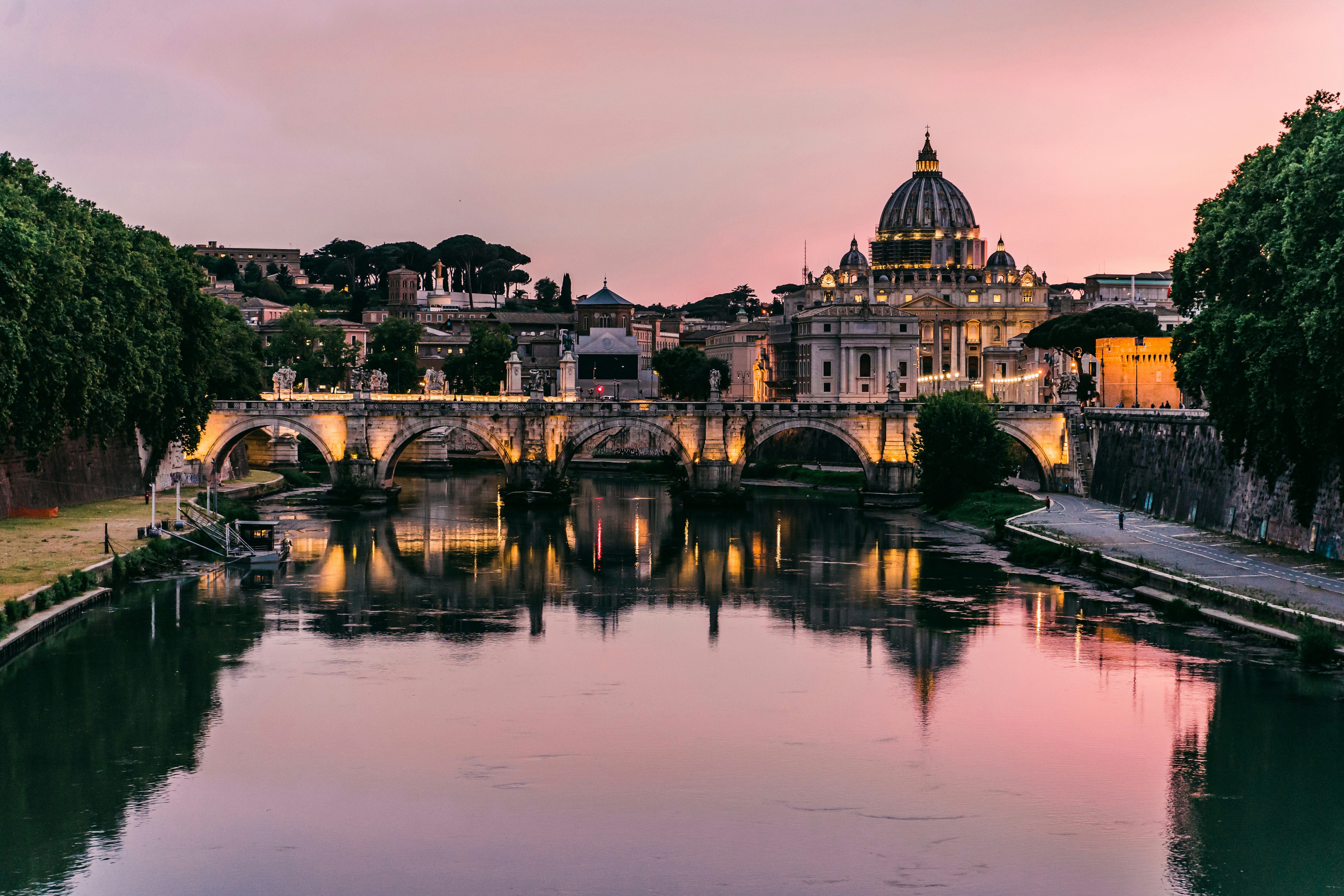
Rome is the capital of Italy and one of the most storied cities in the world — a place where ancient monuments, Renaissance art, and everyday urban life sit side by side. Set along the River Tiber, Rome offers layers of history at every turn, making it one of Europe's most visited destinations.
How to Get to Rome?
By Plane
Rome is served by two main airports — Fiumicino – Leonardo da Vinci (FCO) and Ciampino (CIA).
Fiumicino (FCO) is the larger of the two and the main hub for international flights, southwest of the city. Getting to the City Center: The Leonardo Express runs non-stop to Roma Termini in 32 minutes, with departures every 15 minutes. The service runs from Termini between 04:50 and 23:05, and from the airport between 05:38 and 23:27. For other parts of the city, FL1 regional trains connect the airport with stations including Roma Tiburtina — every 15 minutes on weekdays and every 30 minutes at weekends and on holidays. By taxi, the fixed fare to the city centre, within the Aurelian Walls, is €55.00, per vehicle. (2026 pricing - subject to change)
Ciampino (CIA) is smaller and mainly serves budget airlines, southeast of the city. It has no railway station at the airport itself; connections to the centre are by shuttle coach to Termini or by public bus. By taxi, the fixed fare to the city centre, within the Aurelian Walls, is €40 (2026 pricing - subject to change).
By Train
Rome is exceptionally well connected by rail. Roma Termini, the main station, is served by high-speed Frecciarossa trains linking Turin, Milan, Bologna, Florence, Rome, Naples and Salerno. High-speed services are operated by Trenitalia, the national railway, and Italo, a private operator, with onward regional and international connections.
By Car
Rome is connected to the rest of Italy and Europe by an extensive motorway network, bounded by the Grande Raccordo Anulare — the orbital ring road. Parking in the centre is limited and costly, and much of the historic core is a restricted-traffic zone (ZTL). Public transport is the better option once in the city.
Getting Around
Public Transport
Rome's public transport is run by ATAC. In 2026 the network includes three metro lines (A, B/B1 and C), the tram network, and over 400 urban bus lines. Termini is the main interchange and the only station serving both Line A and Line B.
It includes:
Metro: Trains run roughly 05:30 to 23:30 Sunday to Thursday, extended to 01:30 on Friday and Saturday nights. After the metro closes, night buses (the "N" lines) cover the main routes.
Buses and Trams: An extensive network reaches areas the metro doesn't. The same ticket works across ATAC buses, trams and metro within Rome.
Tickets: The single ticket (BIT) costs €1.50 and is valid for 100 minutes — one metro entry plus unlimited bus and tram transfers within that window. Day passes are also available — €8.50 for 24 hours, €15.00 for 48 hours and €22.00 for 72 hours. Tickets can be bought at machines, ticket offices and authorised retailers, or via contactless Tap & Go and partner apps. (2026 pricing - subject to change)
Note: standard tickets and passes are not valid on the airport train connections — a separate ticket is needed for both Fiumicino and Ciampino.
Cycling
Rome has a growing bike-share network and expanding cycle lanes, though its hills and cobbled streets make it less flat than some European capitals.
Taxis and Ridesharing
Official taxis are white, marked "TAXI" on the roof with the municipal emblem on the doors. Fixed fares apply to and from both airports (above); metered fares apply elsewhere. Ride-hailing apps also operate in the city.
For more information on getting around Rome, timetables, and fares, visit the official ATAC website: www.atac.roma.it.